Walkers & Rollators
The right walker can give you the support and confidence to keep moving—but the right choice isn't the same for everyone. From lightweight folding walkers to 3-wheel models, seated 4-wheel rollators, upright walkers, and heavy-duty options, different designs provide different levels of support, maneuverability, and convenience.
At The Bone Store, we'll help you find a walker that fits both you and the way you live. We'll look at your height, the support you need, where you'll use it, whether you need a seat, and the features that matter to you so you can choose a walker that feels comfortable and natural to use.
4-Wheel Rollators with Seat







3-Wheel Rollators


Specialty Rollators
Folding Walkers


Heavy Duty Rollators

How to Choose the Right Walker or Rollator
A walker should fit your body, provide the amount of support you need, and work well in the places you actually plan to use it. Understanding the differences between walker styles, sizes, wheels, seats, and other features can make choosing the right one much easier.
Continue Reading
Folding Walker or Rollator?
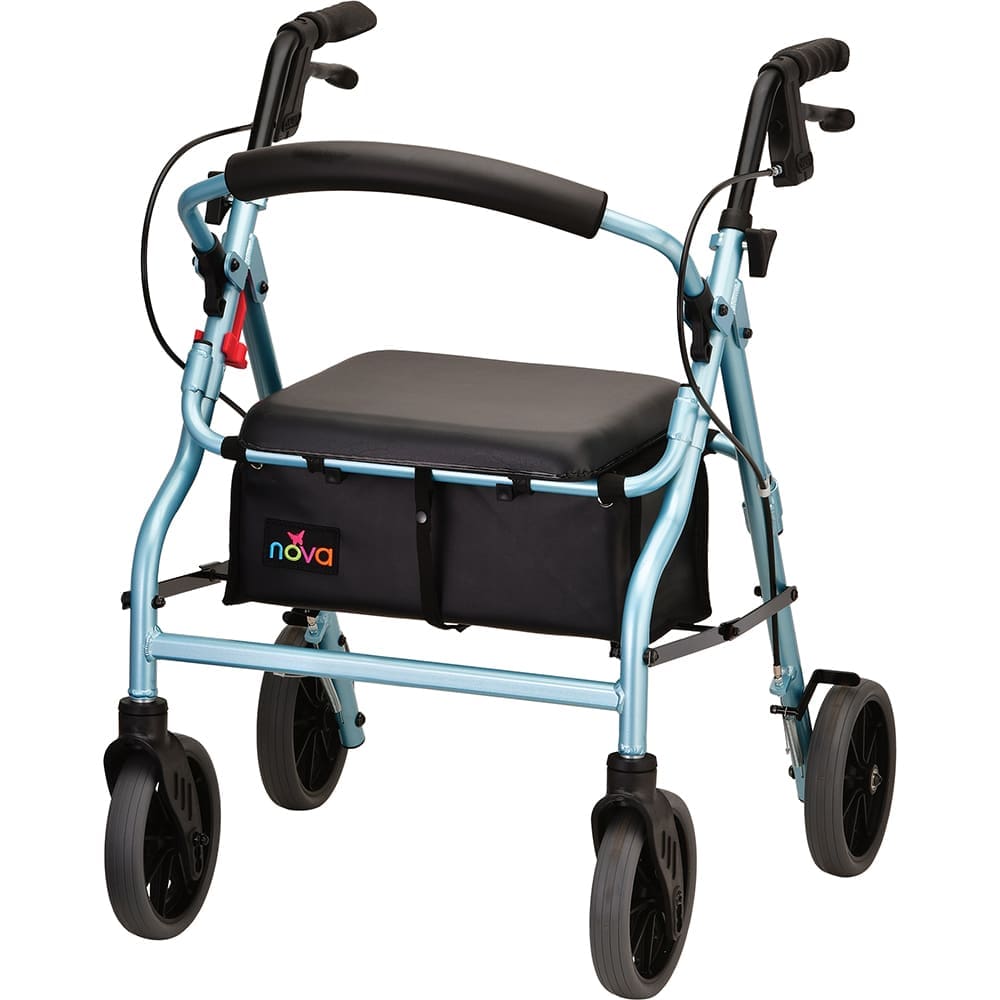
A traditional folding walker and a rollator are designed for different needs. Folding walkers provide a stable frame for support while walking and are generally lightweight and simple. Depending on the model, they may have no wheels or wheels on the front legs.
A rollator has wheels on all of its legs and is designed to roll as you walk. Most 4-wheel rollators also include hand brakes, a seat, and storage. Because a rollator moves more freely than a traditional walker, the amount of balance and control needed to use one is different. The best choice depends on your individual mobility and support needs.
3-Wheel vs. 4-Wheel Rollators
A 3-wheel rollator has a narrower, triangular design that can make it especially maneuverable in tighter spaces. It can be a convenient choice when maneuverability and a smaller footprint are priorities.
A 4-wheel rollator generally provides a wider base and commonly includes a built-in seat, backrest, hand brakes, and storage. If having a place to sit and rest while you're out is important, a 4-wheel rollator is often the style to consider.
What Is an Upright Rollator?
An upright rollator is designed with higher arm supports or handles that allow the user to walk in a more upright position than with a conventional rollator. This creates a different walking posture and may be more comfortable for someone who doesn't like leaning down toward traditional walker handles.
Upright models can also be larger and heavier than some conventional rollators, so consider where you'll use the walker and how you'll transport it in addition to how it feels while walking.
Walker Size Matters
Walkers and rollators are not one-size-fits-all. Handle height, seat height, width between the handles, overall dimensions, and weight capacity can all affect whether a particular model is a good fit.
Don't choose solely based on your height. Two people who are the same height can have different proportions and comfort needs. Whenever possible, adjust and try the walker in person so you can evaluate how naturally you stand, walk, turn, and reach the brakes or handles.
Choosing the Right Seat Height
Seat height is especially important on a rollator because it affects how comfortably you can sit down and stand back up. When seated, you should be able to sit comfortably between the handles with your feet supported on the floor.
A seat that's too high can make it difficult to sit securely, while a seat that's too low can make standing back up more difficult. The Bone Store carries rollators in multiple seat heights so you don't have to settle for a one-size-fits-all solution.
Pay Attention to Width
Width matters in two different ways. First, make sure you fit comfortably between the handles when standing and sitting. Second, consider the overall width of the walker compared with the spaces where you'll use it.
If you have narrow hallways, bathroom entrances, crowded living spaces, or other tight areas, overall width and maneuverability may be especially important. If you're shopping for a walker for a particular space, measuring that space before you visit can be helpful.
Think About Where You'll Walk
A walker that's primarily used inside the home may have different priorities than one used for shopping, appointments, outdoor walks, or travel. Consider flooring transitions, sidewalks, parking lots, grass, thresholds, and other surfaces you regularly encounter.
Wheel size and design can affect how a rollator feels over different surfaces. Larger wheels are often worth considering when you'll regularly encounter outdoor or uneven terrain, while maneuverability and overall size may matter more in tight indoor spaces.
Do You Need a Seat?
One of the biggest advantages of many 4-wheel rollators is having a seat available when you need to rest. This can be particularly useful for shopping, appointments, outings, or other situations where a convenient place to sit may not always be available.
If a seat is important to you, consider more than whether the walker simply has one. Look at seat height, seat dimensions, the space between the handles, back support, and how easily you can sit down and stand back up.
Weight Capacity and Heavy-Duty Rollators
Always stay within the manufacturer's stated weight capacity for the walker or rollator. Heavy-duty models are available for users who need a higher weight capacity or simply benefit from a wider, more substantial frame.
Keep in mind that a heavy-duty rollator may also be wider and heavier. Make sure it provides the capacity and space you need while still fitting through the areas where it will be used and being manageable for transportation.
Don't Forget About Transportation
If your walker will regularly travel with you, think about how you'll get it into and out of your vehicle. Walker weight, folded dimensions, and the folding mechanism can become just as important as how the walker performs once you arrive.
A lightweight model may be easier to lift, while another walker may offer features you value enough to justify additional weight. The best balance depends on your lifestyle and who will be handling the walker during transportation.
Choose Features That Fit Your Life
Storage bags and baskets can make it easier to carry personal belongings while keeping your hands available for the walker. Depending on the model, accessories may also include cup holders, cane holders, trays, lights, and other conveniences.
Start with the features you'll actually use rather than simply choosing the walker with the longest feature list. A walker that fits properly and works well in your everyday environment is more important than extras you may never need.
Try Your Walker Before You Decide
Specifications can help narrow down the choices, but there's no substitute for trying a walker yourself. Visit The Bone Store and walk with different styles, compare seat heights, practice turning, try the brakes, sit down and stand back up, and see how different models feel.
We'll help you compare the options and adjust the walker so you can find a combination of fit, support, maneuverability, and features that works for you.
Frequently Asked Questions About Walkers & Rollators
What's the difference between a walker and a rollator?
A traditional walker provides a frame for support and may have no wheels or wheels only on the front legs. A rollator has wheels on all of its legs and rolls continuously as you walk. Most 4-wheel rollators also include hand brakes, a seat, and storage. Because the two styles move differently, the right choice depends on the amount and type of support you need.
How do I know what size walker I need?
Look at more than your overall height. Handle-height range, seat height, width between the handles, overall width, and weight capacity can all affect fit. Whenever possible, try the walker in person and adjust it so you can walk comfortably without having to reach too far down or stand in an unnatural position.
How do I choose the right rollator seat height?
When sitting on the rollator seat, you should fit comfortably between the handles and be able to place your feet securely on the floor. You should also be able to sit down and stand back up comfortably. Because people have different proportions and mobility needs, trying different seat heights is often the best way to determine which feels right.
What's the difference between a 3-wheel and 4-wheel rollator?
A 3-wheel rollator has a narrower, triangular design that can make it easier to maneuver through tighter spaces. A 4-wheel rollator generally has a wider base and commonly includes a seat, backrest, hand brakes, and storage. If having a place to sit and rest is important, a 4-wheel model is typically the style to consider.
What is an upright walker or upright rollator?
An upright rollator positions the arm supports or handles higher than a conventional rollator so you can walk in a more upright position. The design and dimensions can be quite different from a standard rollator, so it's worth trying one in person to determine whether the walking position feels comfortable and natural to you.
Do all rollators have seats?
No. Many 4-wheel rollators include a built-in seat, but not every rolling walker does. Three-wheel models, for example, are often designed primarily for maneuverability and may not include a seat. If you need somewhere to rest while you're away from home, make the seat one of your priorities when comparing models.
Are bigger wheels better on a rollator?
It depends on where you'll use it. Larger wheels can be helpful when navigating outdoor or less-even surfaces, while overall size and maneuverability may be more important in tight indoor spaces. Think about the surfaces and environments you encounter most often rather than choosing based on wheel size alone.
What should I look for if I need a heavy-duty rollator?
Start with the manufacturer's weight capacity, then look at the width between the handles, seat dimensions, seat height, overall width, and the weight of the rollator itself. A higher-capacity model should provide enough room to use the walker comfortably while still fitting through the doorways and spaces where you plan to use it.
How important is the weight of the walker?
Walker weight is especially important if you'll frequently load it into a vehicle, carry it up steps, or have limited lifting ability. A lighter walker may be easier to transport, but weight is only one consideration. Fit, stability, features, wheel size, seat dimensions, and weight capacity may also affect which model works best for you.
How do the brakes work on a rollator?
Many rollators use hand-brake levers similar in concept to bicycle brakes. The brakes can be squeezed while walking to slow or stop the rollator, and many models allow the brake levers to be pushed into a locked position when the rollator is parked. Always engage the parking brakes before sitting on a rollator seat and follow the instructions for your specific model.
Can I sit on my rollator and have someone push me?
Not unless the manufacturer specifically states that the product is designed for that purpose. A standard rollator with a seat is generally intended to provide a place to sit while the rollator is stationary, not to function as a transport chair. If you need both walking support and the ability to be pushed while seated, look for a product specifically designed as a rollator/transport-chair combination.
Will my walker fit through my doorways?
Check the overall width of the walker and compare it with the narrowest doorways and spaces you'll regularly travel through. Don't rely only on the width between the handles—that measurement describes the space available for the user and may be considerably different from the walker's overall width.
What accessories can I add to a walker or rollator?
Available accessories vary by model and may include storage bags, baskets, trays, cup holders, cane holders, lights, and other conveniences. Check compatibility with your particular walker before adding an accessory, especially if it attaches directly to the frame.
Can The Bone Store help fit me for a walker?
Yes. Visit The Bone Store and we'll help you compare walker and rollator styles, sizes, seat heights, weight capacities, and features. You can try different options in person, and we'll help adjust the walker so you can evaluate how it feels while standing, walking, turning, sitting, and using the brakes.
Your Nearest Bone Store
Keep in contact with us to receive more exclusive offers!
Fresno Store Hours: Monday - Friday 9am to 6pm | Saturday 10am to 5pm | Closed Sunday
Bakersfield, Stockton & Visalia Store Hours: Monday - Friday 10am to 6pm | Saturday 10am to 5pm | Closed Sunday
Have a Question? Give us a call!
Bakersfield 661-846-7500 | Fresno 559-226-7500 | Stockton 209-720-7500 | Visalia 559-739-7500