Fall Prevention
A fall can change the way you feel about moving through your own home—but the right equipment can help make everyday activities feel safer and more manageable. From getting out of bed in the morning to walking through the house, using the bathroom, and getting up from a chair, small changes can provide meaningful support where you need it most.
At The Bone Store, we carry Fall Prevention solutions for use throughout the home, including walkers and rollators, canes, bed rails, security poles, grab bars, shower seating, toilet safety products, transfer aids, and more. Whether you're being proactive or responding to changes in strength, balance, or mobility, we're here to help you find practical solutions that fit your needs and your home.
Bedroom Safety





Walkers & Rollators
-



Star 8 Rollator
Star 8 Rollator with a Wide Back.
-


-

Vehicle Safety


Creating a Safer Home and Daily Routine
Fall prevention isn't about one particular product. It's about looking at the places and movements that are becoming difficult and finding practical ways to add stability, reduce unnecessary challenges, and make everyday activities easier to manage.
Continue Reading
Start With the Movements That Feel Difficult
Think about the moments during the day when you feel least steady or need to reach for furniture, walls, or another person for support. Getting out of bed, standing from a chair, walking to the bathroom, stepping into a shower, getting up from the toilet, and moving across uneven surfaces are all good places to start.
Once you identify the difficult movement, it's much easier to determine what kind of support may help. The solution might be a handhold, a higher sitting surface, a place to sit while completing an activity, or a mobility aid that provides support while walking.
Safer Walking Throughout the Day
When balance, strength, endurance, or confidence while walking has changed, a mobility aid can provide additional support. Canes offer a compact option for people who need some assistance, while walkers provide a larger base of support. Rollators add wheels for easier movement and commonly include hand brakes and a seat for resting.
The appropriate mobility aid depends on your balance, walking ability, strength, environment, and how much support you need. Proper height adjustment is also important so the device can be used comfortably and as intended.
Getting In and Out of Bed
Moving from lying down to sitting and then standing can become challenging when pain, weakness, or reduced mobility makes those transitions harder. Bed rails and bed canes can provide a secure handhold for repositioning, sitting upright, and transferring between the bed and a standing position.
Security poles can provide another source of support beside the bed or elsewhere in the room. Because beds vary considerably, always check mattress thickness, bed-frame construction, available space, and compatibility with adjustable bases before choosing a bedside support.
Bathroom Fall Prevention
Bathrooms present several challenges at once: wet surfaces, limited space, changes in position, and movements such as stepping over a bathtub wall or lowering yourself onto a toilet. Rather than looking for one bathroom safety product, consider each movement separately.
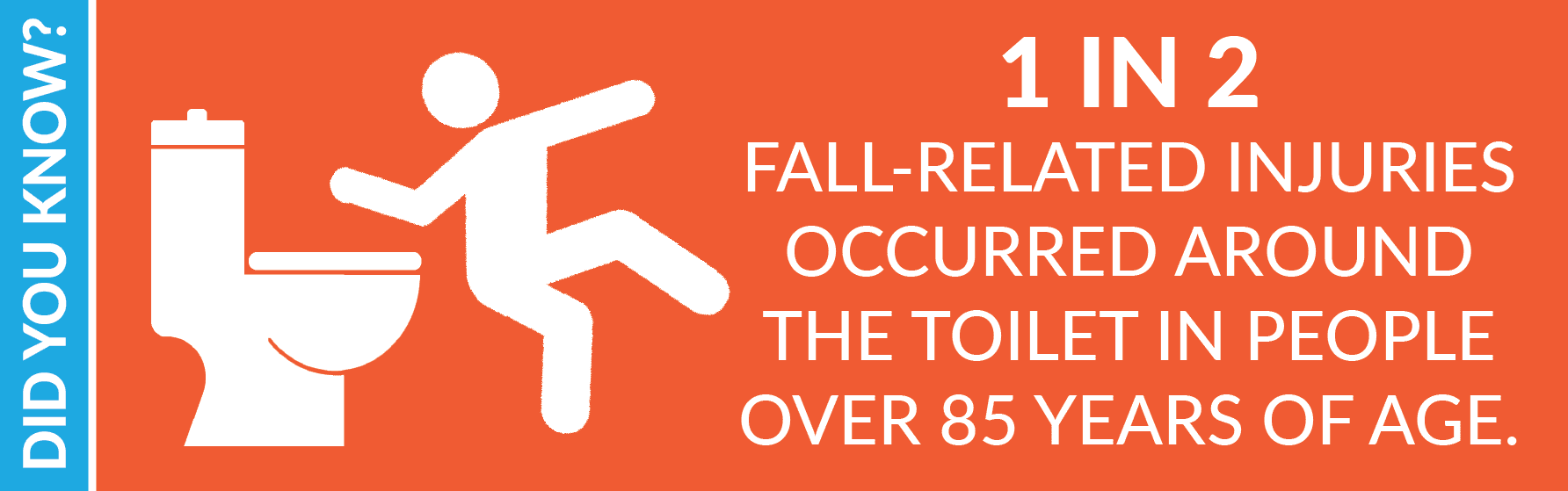
Shower chairs and bath seats provide a place to sit while bathing. Transfer benches can reduce the need to step over a bathtub wall while standing. Raised toilet seats reduce how far you need to lower yourself, while toilet safety frames, grab bars, and security poles can provide additional handholds for sitting, standing, and transferring.
Make Frequently Used Items Easier to Reach
Reaching too far, bending deeply, or climbing onto a stool can introduce unnecessary challenges when balance or mobility is limited. Keep frequently used items within a comfortable reach whenever possible, especially in the bathroom, bedroom, and kitchen.
Simple accessories can help as well. A handheld shower, for example, allows someone using a shower chair to bring the water to them rather than repeatedly standing or reaching. An overbed table can keep frequently used items accessible from a bed or chair.
Look at the Environment, Not Just the Person
Fall prevention also means looking at the space around you. Keep walking paths clear, pay attention to loose rugs and cords, make sure commonly traveled areas are adequately lit, and consider whether furniture placement creates narrow or awkward pathways.
Wet areas deserve particular attention. Bath mats and other products designed to improve traction may be helpful on compatible surfaces, but they need to be properly installed and appropriate for the surface on which they're being used.
Use the Right Support in the Right Place
A nearby towel rack, countertop, piece of furniture, or door handle may be tempting to grab when you need support, but it wasn't necessarily designed to bear your weight. Purpose-built grab bars, safety rails, bed supports, and security poles are designed specifically to provide support when properly selected and installed.
Always follow the manufacturer's installation, compatibility, and weight-capacity requirements. Permanently mounted grab bars should be securely attached to appropriate structural supports.
Think About the Whole Route
Instead of looking at one room in isolation, think about an entire routine. For example: getting out of bed, standing, walking to the bathroom, sitting on the toilet, entering the shower, bathing, and returning to the bedroom. A person may be well supported during one part of that routine but have difficulty during another.
Looking at the complete route can help identify gaps where another handhold, mobility aid, seating surface, or transfer aid could make the routine more manageable.
Choosing Fall Prevention Equipment
There isn't one fall prevention setup that's right for everyone. The appropriate equipment depends on the movements that are difficult, the amount of support needed, the person's mobility, and the layout of the home.
Measurements matter, too. Depending on the product, useful information may include doorway widths, bathroom dimensions, toilet height, bathtub dimensions, mattress thickness, bed construction, ceiling height, and available floor space.
If you're not sure where to start, visit The Bone Store. Tell us which activities or movements are becoming difficult, and our staff can help you compare options for mobility, bathroom safety, bedroom safety, transfers, and other areas of everyday life.
Frequently Asked Questions About Fall Prevention
Where should I start when choosing fall prevention equipment?
Start by identifying the movements or situations that feel difficult or unsteady. Think about getting out of bed, standing from a chair, walking through the home, using the toilet, entering and exiting the shower or bathtub, and navigating steps or uneven surfaces. Once you know where additional support is needed, you can focus on equipment designed for that particular activity.
What types of products can help with fall prevention?
Fall prevention products can include canes, walkers, rollators, bed rails and bed canes, security poles, grab bars, shower chairs, bath seats, transfer benches, raised toilet seats, toilet safety frames, commodes, bath mats, and other mobility and transfer aids. The appropriate products depend on where and when additional support is needed.
What's the difference between a cane, walker, and rollator?
A cane provides a compact point of support while walking. A traditional walker provides a larger base of support and may be appropriate when greater stability is needed. A rollator uses wheels for easier movement and typically includes hand brakes, while many models also include a seat for resting. The right choice depends on your balance, strength, walking ability, environment, and support needs.
What can make getting out of bed safer and easier?
Bed rails and bed canes can provide a secure handhold for repositioning, sitting upright, and transitioning between the bed and standing. A security pole may provide another option for support beside the bed. Compatibility varies considerably by product and bed, so mattress thickness, bed-frame construction, available space, and adjustable-base compatibility should be checked before choosing a bedside support.
What can help make a bathroom safer?
Start with the specific movement that is difficult. Shower chairs and bath seats provide a place to sit while bathing. Transfer benches can make entering and exiting a bathtub easier when stepping over the tub wall is difficult. Raised toilet seats reduce how far you need to lower yourself, while toilet safety frames, grab bars, and security poles can provide additional support for sitting, standing, and transferring.
Should I use furniture or a towel bar for support if I feel unsteady?
Furniture, towel bars, countertops, and other household fixtures aren't necessarily designed to support a person's weight and may move or fail when grabbed. When additional support is needed, use a product designed for that purpose and make sure it is properly installed and appropriate for the intended location.
What should I look for around the home that could contribute to a fall?
Look for obstacles or conditions that make walking and transfers more difficult, including cluttered pathways, loose rugs, cords, poor lighting, slippery surfaces, and awkward furniture placement. Also pay attention to situations that require reaching, bending, climbing, or stepping over obstacles. Addressing the environment can be an important part of a broader fall prevention plan.
How can I make showering easier if standing is difficult?
A shower chair, bath seat, or shower stool provides a place to sit while bathing. Pairing seated bathing with a handheld shower can make it easier to wash without repeatedly standing or reaching. Depending on the bathroom layout and mobility needs, grab bars, security poles, or a transfer bench may provide additional support.
What can help if getting on and off the toilet is difficult?
A raised toilet seat or toilet riser increases the sitting height so you don't have to lower yourself as far. A toilet safety frame provides arm supports for sitting and standing. A commode may provide another option and, depending on the model, may be used at the bedside or positioned over an existing toilet.
Do I need to measure before buying fall prevention equipment?
Often, yes. The measurements depend on the product and may include doorway width, toilet dimensions and height, bathtub or shower dimensions, available floor space, mattress thickness, bed-frame construction, or ceiling height. Bringing measurements with you can make it much easier to determine which products will work in your home.
Does The Bone Store install grab bars?
No. The Bone Store is not currently set up to perform home grab-bar installations. Permanently mounted grab bars need to be securely attached to appropriate structural supports, so we recommend working with a qualified installer or reliable handyman and following the manufacturer's installation requirements.
Can The Bone Store help me figure out what fall prevention products I need?
Yes. You don't necessarily need to know the name of the product you're looking for. Tell us which movements or activities are difficult, where they happen, and what kind of support you currently need. If the equipment needs to fit a particular space, bring measurements when possible. Our staff can help you compare mobility aids, bathroom safety products, bedroom safety equipment, and other options that may fit your needs and home.
Your Nearest Bone Store
Keep in contact with us to receive more exclusive offers!
Fresno Store Hours: Monday - Friday 9am to 6pm | Saturday 10am to 5pm | Closed Sunday
Bakersfield, Stockton & Visalia Store Hours: Monday - Friday 10am to 6pm | Saturday 10am to 5pm | Closed Sunday
Have a Question? Give us a call!
Bakersfield 661-846-7500 | Fresno 559-226-7500 | Stockton 209-720-7500 | Visalia 559-739-7500