
PowerStep Orthotics
When your feet hurt, it can affect far more than your steps. Poor support or alignment may contribute to discomfort in the arches, heels, knees, hips, and lower back, making work, exercise, and everyday activities harder than they need to be.
PowerStep orthotic insoles combine supportive arch and heel contours with comfortable cushioning to help improve foot alignment and reduce strain from the ground up. With options for different arch heights, shoe styles, activity levels, and common foot conditions, The Bone Store can help you find a PowerStep insole that fits both your feet and your daily routine.
-

Powerstep ProTech Full Length Orthotic
#1 Podiatrist Recommended Brand
-

Powerstep ProTech 3/4
#1 Podiatrist Recommended Brand
-
How PowerStep Orthotic Insoles Support Your Feet
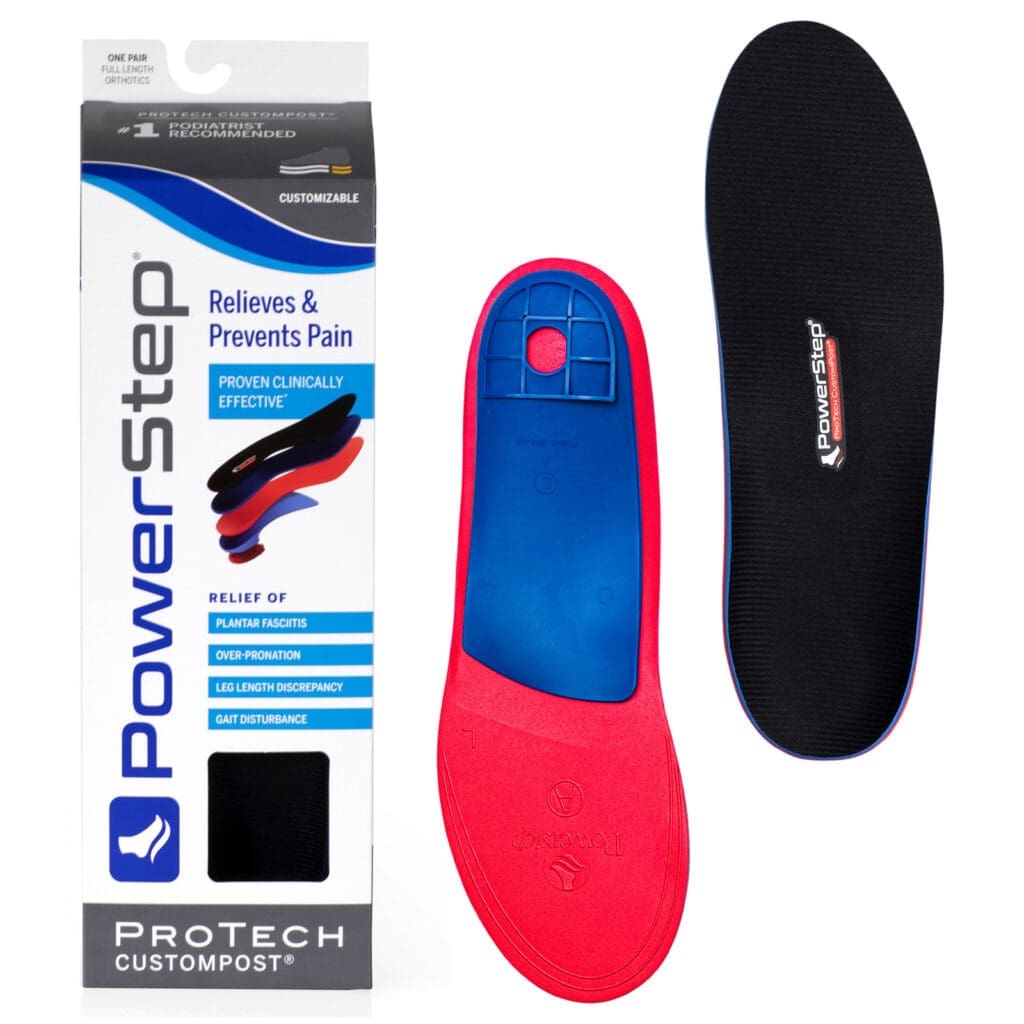
PowerStep insoles do more than add padding inside your shoes. Their contoured designs combine arch support, heel stability, and cushioning to help improve foot position, distribute pressure, and make standing or walking more comfortable. Different PowerStep models are available for specific arch types, footwear styles, activities, and areas of discomfort.
Continue Reading
Arch and Heel Support
PowerStep orthotics include a shaped support shell designed to cradle the arch and heel. This support helps stabilize the foot and promote healthier alignment rather than simply placing a soft cushion beneath it.
Most PowerStep insoles use a neutral arch profile that works for many users, while select models offer lower or higher arch support for people with flat feet, fallen arches, high arches, or supination.
Support for Common Foot Conditions
Different PowerStep styles are designed to address different sources of discomfort. Available options may help support people dealing with plantar fasciitis, heel pain, arch pain, overpronation, flat feet, high arches, ball-of-foot discomfort, or tired and aching feet.
Some models include added features such as heel posting for greater control, metatarsal cushioning for the ball of the foot, or additional shock absorption for running and other high-impact activities.
Cushioning Without Sacrificing Stability
Soft cushioning can make shoes feel more comfortable, but cushioning alone may not provide enough support. PowerStep combines cushioning with a supportive foundation to help absorb impact while maintaining stability beneath the arch and heel.
The amount and type of cushioning vary by model. Some insoles are made for everyday walking and standing, while others are designed for athletic shoes, work boots, dress shoes, or footwear with limited interior space.
Options for Different Shoes
Full-length PowerStep insoles provide cushioning and support from the heel through the toe and generally work best in shoes with removable factory liners. Three-quarter-length and low-profile models take up less room and may fit more easily in dress shoes, casual shoes, or other tighter-fitting footwear.
Choosing the appropriate profile is important. An insole that is too thick for a shoe may make the footwear feel cramped, even when the support itself is appropriate.
Allow Time to Adjust
Orthotic support can change the way your feet and lower body are positioned, so new users may need an adjustment period. PowerStep recommends beginning with limited wear and gradually increasing the amount of time spent in the insoles.
If discomfort continues rather than improving, the arch height, support level, size, or model may not be the right match. Our team can help you compare options and understand how the different PowerStep designs vary.
Frequently Asked Questions About PowerStep Orthotics
How do I choose the right PowerStep insole?
The best PowerStep insole depends on your arch height, foot condition, activity level, shoe style, and the amount of cushioning and support you need. Some models are designed for general arch and heel support, while others provide additional control for overpronation, targeted cushioning for the ball of the foot, or specialized support for low or high arches.
Do PowerStep insoles help with plantar fasciitis and heel pain?
Many PowerStep insoles are designed to provide arch support, heel cushioning, and improved foot stability, which may help reduce strain associated with plantar fasciitis, arch pain, and heel discomfort. The most appropriate model depends on your foot shape, support needs, and footwear.
How long does it take to adjust to PowerStep orthotics?
PowerStep states that many new users need one to two weeks to become accustomed to orthotic support. The manufacturer recommends wearing the insoles for up to one hour on the first day and increasing wear time by approximately one hour each day. More sensitive users may need to begin with shorter periods.
Should I remove my shoes’ original insoles first?
For most full-length PowerStep orthotics, remove the shoe’s original removable liner before inserting the PowerStep insole. This creates enough room for the orthotic and helps prevent the shoe from feeling too tight. Three-quarter-length models may be placed over a non-removable factory liner when the shoe has sufficient space.
What is the difference between full-length and three-quarter-length insoles?
Full-length insoles provide cushioning and support from the heel to the toe and are generally best for athletic, walking, work, or casual shoes with removable liners. Three-quarter-length insoles end behind the forefoot, take up less space, and may work better in dress shoes or other tighter-fitting footwear.
Can PowerStep insoles be trimmed to fit?
Many PowerStep insoles are sized to fit without trimming, but they may be carefully trimmed when necessary. PowerStep recommends using the shoe’s removable factory liner as a template and trimming no more than approximately one-half inch. Always review the instructions for the specific model before cutting it.
Can I move my PowerStep insoles between different shoes?
Yes. PowerStep insoles can generally be removed and transferred between compatible shoes. However, shoes vary in depth, width, and interior shape, so the same insole may not fit equally well in every pair. Using a separate pair of orthotics in frequently worn shoes may also reduce repeated handling and extend their useful life.
How do I clean PowerStep orthotic insoles?
Spot clean the insoles with mild detergent and allow them to air dry completely before returning them to your shoes. Do not immerse PowerStep insoles in water or place them in a washing machine or clothes dryer.
How long do PowerStep insoles usually last?
PowerStep states that its insoles typically last six months or longer under normal casual wear. Product life varies based on body mechanics, activity level, frequency of use, shoe type, and whether the same pair is worn every day. Replace the insoles when cushioning, comfort, or support noticeably decreases.
Are PowerStep insoles latex free?
Yes. PowerStep states that its orthotic insoles are latex free.
Can The Bone Store help me select a PowerStep insole?
Yes. The Bone Store team can help you compare PowerStep models based on your arch type, symptoms, footwear, activity level, and preferred cushioning. Because fit and support needs vary from person to person, seeing the different options in store can make it easier to choose an appropriate model.
Your Nearest Bone Store
Keep in contact with us to receive more exclusive offers!
Fresno Store Hours: Monday - Friday 9am to 6pm | Saturday 10am to 5pm | Closed Sunday
Bakersfield, Stockton & Visalia Store Hours: Monday - Friday 10am to 6pm | Saturday 10am to 5pm | Closed Sunday
Have a Question? Give us a call!
Bakersfield 661-846-7500 | Fresno 559-226-7500 | Stockton 209-720-7500 | Visalia 559-739-7500